Posts

ART EAST AFRICA

Image
Edward Saidi Tingatinga, Untitled (Elephant Eating from the Marula Tree), 1971.  Sold Ksh 5,635,200 7.30PM on TUESDAY 5 MARCH 2019 at The RADISSON BLU HOTEL, NAIROBI This year, we were invited to hold the Modern and Contemporary Art Auction East Africa 2019 in the lovely ballroom at the Radisson Blu Hotel in Upper Hill, Nairobi. With 59 Lots from seven countries, we auctioned some rare and exceptional sculptures this year; Lot 31 & 32 by the late master sculptor Samuel Wanjau; and stunning, well priced paintings dating from the 1960s to present. With an emphasis on modern and the secondary market, we were able to find some very unusual works, such as Lot 29, the Piano Player by Fabian Mpagi, and Lot 25 by the late Robin Anderson. We welcomed KCB, Kenya’s largest bank, as our new partner, and new drinks sponsors, Glenfiddich whisky and Hendricks gin. Auctioneer, Chilson Wamoja, who has assisted us at all our auctions took the sa...

Jean Pigozzi on Africa

Image
I really like this interview with Jean Pigozzi. His Collection is really authentic and his earlier works pre-Internet are fantastic, it so rare to find African homegrown Art today. The support really goes to those trained in the West so this is so refreshing.. Take a look at the Jean Pigozzi Collection | http://www.caacart.com/

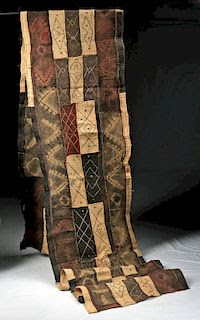
Kuba Dance Skirts | Democratic Republic of Congo

Image
African Kuba Raffia & Cowrie Shell Dance Skirt - 1950s   Estimate | $4,000 - $5,000 Central Africa, Democratic Republic of the Congo, Kuba, ca. mid 20th century CE. Framed Kuba cloth comprised of three panels sewn together - each one presenting bold geometric patterns - a plethora of diamond and chevron motifs - in warm earth tones: chocolate brown, tawny red, and warm tan on a creamy beige ground. Traditionally, kuba cloth is woven from raffia-tree leaves; this example is comprised of naturally colored fabric created via a laborious process of hand-dyeing using mud, indigo, or the powdered bark of the camwood tree. Such cloths are usually created by Kuba men on a single heddle loom. Next they are embroidered by women and children to create an uncut or cut-pile appearance (the latter resembling a velvet or velour texture). Kuba cloths are worn during ceremonial events, especially funerals; however, they are also found in tapestries and home furnishings. The abstract geometric p...

Kube Dance Skirt | Democratic Republic of Congo

Image
African Kuba Raffia & Cowrie Shell Dance Skirt - 1950s   Estimate | $4,000 - $5,000   Africa, Democratic Republic of Congo, ca. 1950. A traditional Kuba dance skirt (Tcaka) - handmade from raffia and hand-stitched with immense artistry, presenting bold geometric patterns in warm earth tones - rich browns and toasty almond beiges - as well as pops of more vibrant color - magenta, blue, green, and pink. Such cloths are usually created by Kuba men on a single heddle loom. Next they are embroidered by women and children to create an uncut or cut-pile appearance. Highly decorative and created with painstaking technique, this skirt presents panels of checkerboard patterns and an applied overlapping zigzag/diamond motif comprised of pink, black, and houndstooth fabrics. The trim is made of alternating passages of cut raffia pom poms and cowrie shells. A particularly exceptional example given that it is made of raffia, demonstrates immense artistry with intricate patterns, skillfu...

Frank Bowling | Tiger Falls, 1980

Image
Frank Bowling RA, OBE Tiger Falls signed, titled and dated '“TIGER FALLS” Frank Bowling 1980' on the reverse acrylic on canvas 117.5 x 64.5 cm (46 1/4 x 25 3/8 in.) Painted in 1980. 20th Century Work of Art   Estimate £40,000 - 60,000 Phillips Sale on 28th June 2019 “TIGER FALLS” Frank Bowling 1980 “TIGER FALLS” Frank Bowling 1980     “TIGER FALLS” Frank Bowling 1980 “TIGER FALLS” Frank Bowling 1980' Provenance Spanierman Modern Gallery, New York Private Collection, California Catalogue Essay ‘In my youth I tended to look at the tragic side of human behaviour and try and reflect that in my work, but gradually as I became more involved in the making of paintings, I realised that one of the main ingredients in making paintings was colour and geometry.’ - Frank Bowling Undoubtedly one of Britain’s finest formalist painters, Frank Bowling’s painterly practice is currently being celebrated at the artist’s retrospective at the Tate Britain this summer. Since the 1960s, Bo...

Season by Wole Soyinka

Image
Image by Joe Pollitt from his series, 'African Graffiti | The Walls Have Ears" 2004 Poets from Biafra and Nigeria Wole Soyinka Season Rust is ripeness, rust And the wilted corn-plume; Pollen is mating-time when swallows Weave a dance Of feathered arrows Thread corn-stalks in winged Streaks of light. And, we loved to hear Rasps in the field, where corn leaves Pierce like bamboo slivers. Now, garnerers we, Awaiting rust on tassels, draw Long shadows from the dust, wreathe Dry thatch in woodsmoke. Laden stalks Ride the germ’s decay – we wait The promise of the rust.

The Changing Face of Civilization by Joe Pollitt

The Changing Face of Civilization Today, thankfully we are coming to the end of an abysmal cycle of Civilization. The Greeks had their time, so too the Romans and later the British, French, Portuguese and the Americans. The rise and fall of Empire is solely dependent on whether or not those that are Governed by the so-called, ‘civilized’ are prepared to tolerate the notion of unjust, outdated feudal systems, whereby power, (both economic and intellectual) is distributed to the few. These cycles of Civilization are constant, ever changing and optimistic; sadly, the civilization of now has its roots based strictly on race. Its success has been largely dictated by the blatant exploitation of the Continent of Africa. This comes in many guises, the resources found in the ground and the forced migration of the vast unpaid workforce in the form of slavery. This perverse human ownership, similar to that of cattle-thieves and homogeneously as noble, was a foreign affair whereas Colonization, le...